The Problem
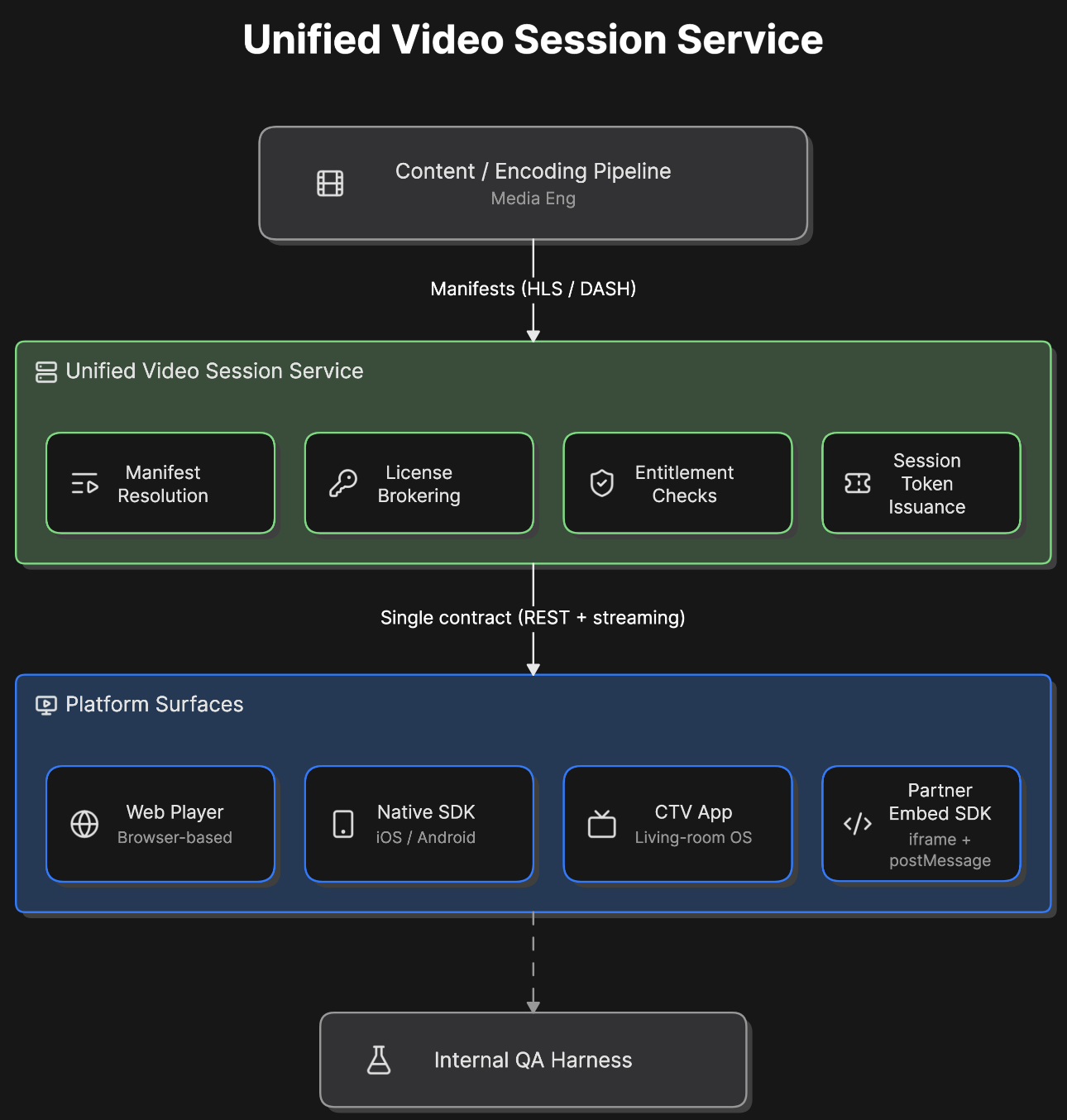
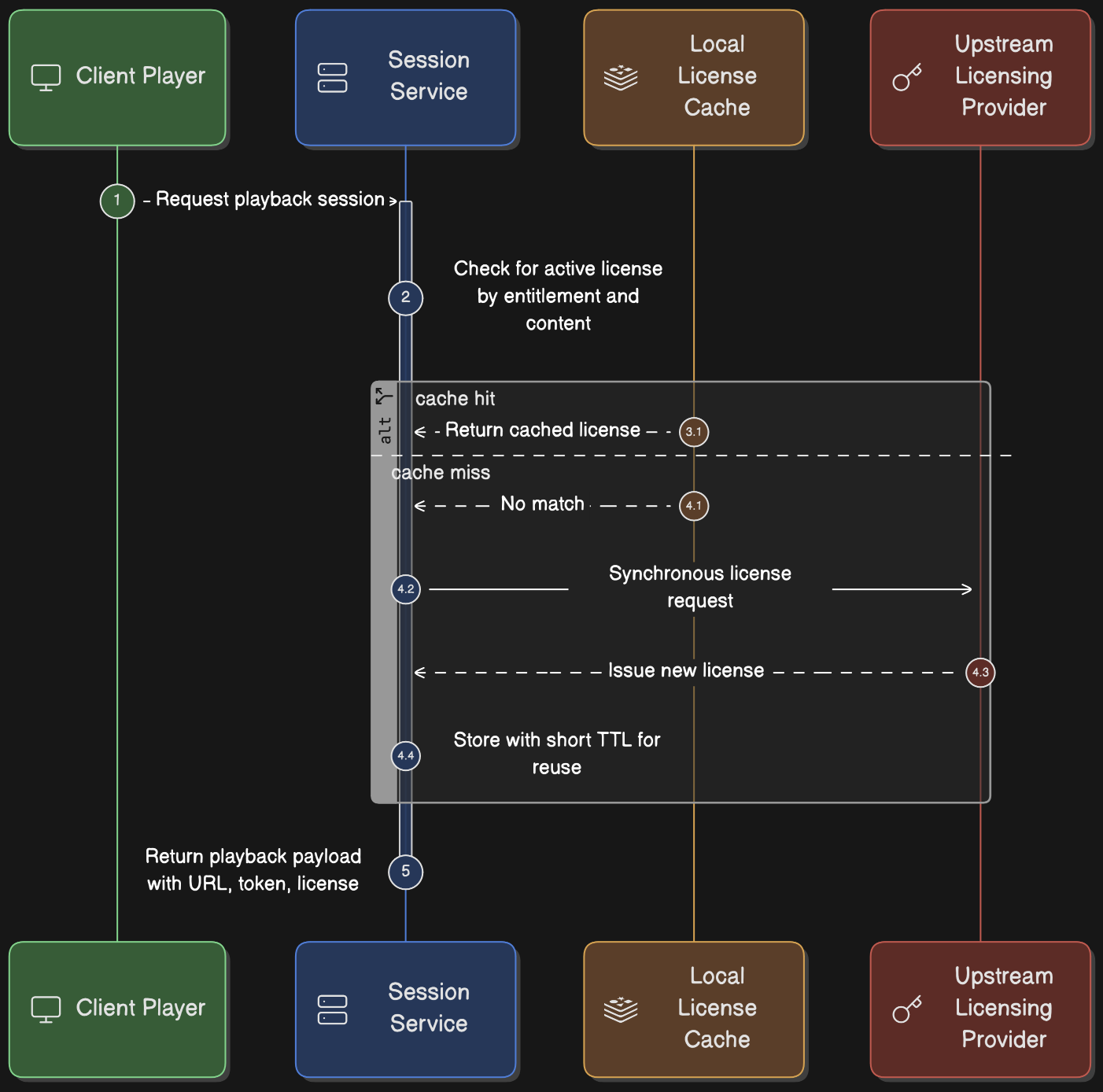
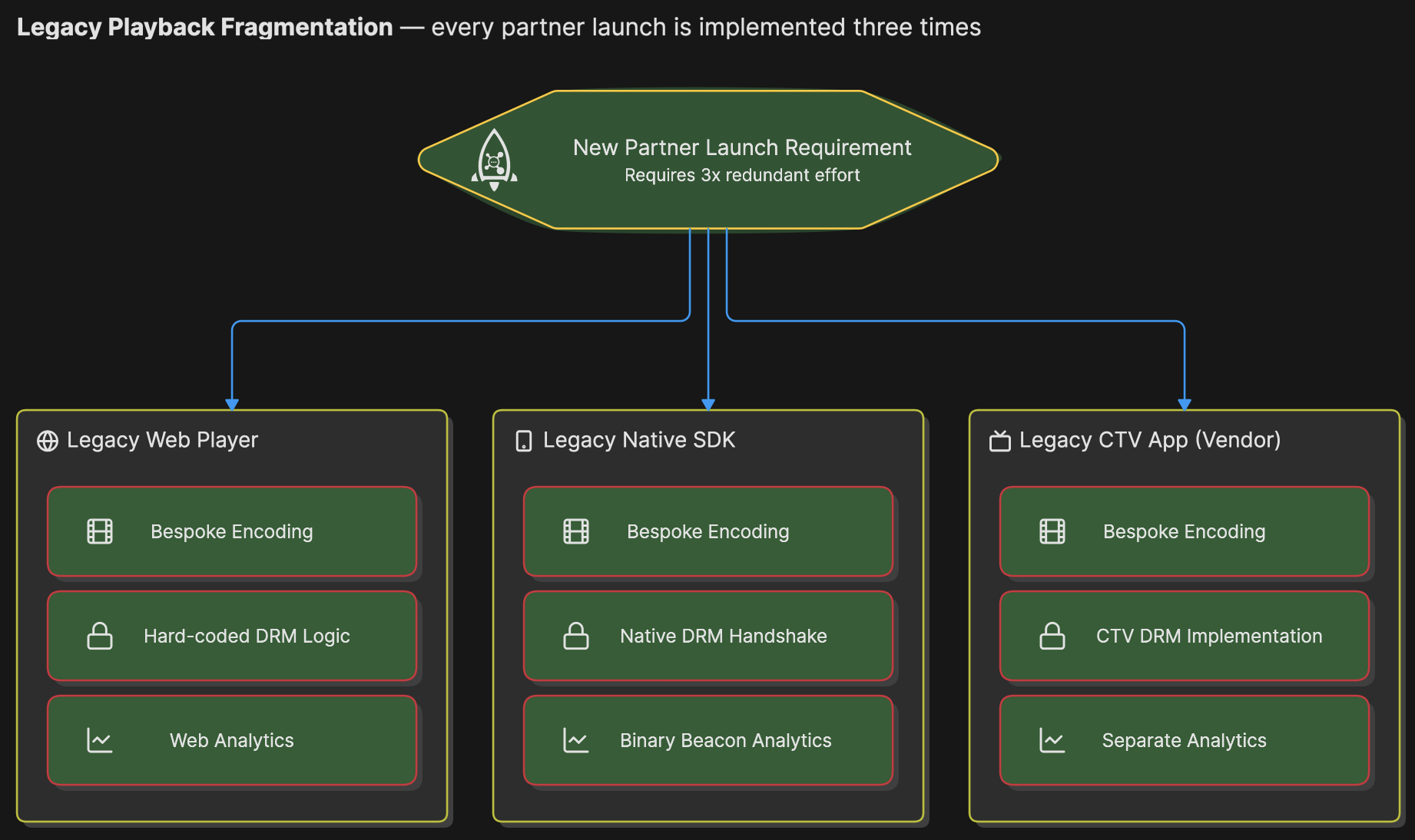
The organization operated multiple independently-built video experiences that had grown organically over several years: a browser-based web player, a native mobile SDK (maintained separately per platform), and a connected-TV (CTV) app built with an external vendor's involvement. Each surface had its own encoding pipeline, analytics schema, DRM handshake, and bug backlog. When a new business partnership required live video to be embeddable inside multiple external partner sites, engineering discovered there was no single, reusable “video integration layer” — every platform would need bespoke work, in parallel, against a fixed external launch date.
Core ProblemFragmented, platform-specific codebases. No shared session or analytics contract. A firm external launch deadline.
Quantifying the Impact
The team framed success around three clear goals: reduce new-surface launch time, materially lower video-related Sev-1 incidents, and support large-scale concurrency without re-architecting later.
These directional goals — not just “make video better” — anchored every architecture and scope decision that followed.
My Role — Ownership Boundaries
I led the cross-functional delivery of the platform integration layer — the shared player core, the unified session/manifest service, the analytics event contract, and the CTV/partner-embed SDK surface — driving alignment across the engineering pods that built it, rather than authoring the implementation myself.
Drove
- Architectural consensus on the shared session contract from discovery through sign-off.
- Alignment across four engineering pods (web, native, CTV, partner/embed) on one contract and timeline.
- Vendor escalation for licensing-latency risk, framing the business impact to unblock launch.
- Program governance: cross-pod tracking, stakeholder dashboard, decision log.
Did Not Own
- Hands-on implementation — I worked with each pod’s engineers rather than authoring the code.
- Content encoding/transcoding pipeline — owned by media engineering.
- CDN routing and edge caching — owned by infrastructure and reliability.
- Ad insertion logic — owned by monetization, although I drove the integration requirements.
Making this delivery/ownership boundary explicit early — via a short scope document circulated to all contributing teams — prevented two common failure modes on cross-team platform work: ambiguity about who was accountable for implementation versus alignment, and decisions nobody actually owned.